
Elusive and nocturnal, the slender loris is a primitive primate and an inhabitant of the forests and woodlands of Sri Lanka.
Despite being relatively widespread across the island – the landscape being shared by two distinct species and several subspecies – the loris is rarely seen and studied even less.
At Jetwing Vil Uyana, however, a thriving wild population has established itself and can be spotted reliably and frequently thanks to the extensive conservation and rewilding efforts carried out at the hotel.
When the first northern grey slender loris (Loris lydekkerianus nordicus) was glimpsed at a forest patch at Jetwing Vil Uyana in 2010, few would have guessed at the significance of the sighting or the conservation effort that was to follow on the heels of the elusive nocturnal primate.
Prompt action by Jetwing’s management saw development plans for the forest patch shelved and the area, comprising rich vegetation, declared as Jetwing Vil Uyana’s Loris Conservation Site – the first conservation area in the island dedicated to this oft-neglected mammal.
The project is, in equal parts, an earnest conservation effort, a testament to how tourism can assist in environmental restoration and biodiversity protection, and a study into how largely ignored, smaller animals can be vessels for awareness and conservation.

The Loris Conservation Fund was initiated as a means to further the conservation and research work by the hotel. Supported by a portion of the income from the Loris Trail, the fund has become a driving force of conservation and wildlife awareness for not only the loris, but other species at Jetwing Vil Uyana and the surrounding countryside.
Through the Fund, we have been able to build a Loris Information Center, publish multiple books on the behaviour and ecology of the loris and the fishing cat, a field guide to the wildlife in and around Sigiriya, purchase equipment such as trail cameras, and perhaps most importantly, build a Community Library and Wildlife Awareness Center for the students of the Rangirigama Village.

The first glimpse of the creature that would become the icon of Jetwing Vil Uyana occurred in 2010, during a routine night walk when the flashlight of the naturalist fell on a gleaming pair of red eyes. Within a few months, a preliminary trail was put in place, allowing guests to experience the behaviour of this rarely seen nocturnal mammal.
As the loris numbers at the hotel increased and the population established itself, plans for the construction of additional dwellings were shelved and a decision was made by the management to declare a part of the hotel’s forests as a Loris Conservation Site, dedicated to its research and protection.
The success of the Loris Conservation Site and the ensuing protection and lack of disturbance was soon proven by the birth of twins within the protected area – an exciting moment for all of us at Jetwing Vil Uyana.
With a portion of the proceeds from the Loris Trail, a Loris Conservation Fund was created to assist in research, education, and awareness. One of the Fund’s very first projects was the publication of the 1st edition of the Slender Loris Information Booklet, authored by naturalist Chaminda Jayasekera.
Although development projects were halted for the conservation of the loris, many animal species benefited from the forests and vegetation that was left undisturbed.
Animals such as fishing cats, rusty-spotted cats, and otters along with a myriad birds were beginning to be spotted more frequently at the hotel.
With thousands of hours of exploration and research under his belt, Chaminda published the 2nd edition of his Loris Information Booklet with information on new and enthralling behaviour of the slender loris and incredible photographs of their diet, mating and child caring.
With the success rate and years of research that we have at our disposal on the behaviour and ecology of the slender loris, Jetwing Vil Uyana was chosen as one of the sites for a special on global primates which was filmed by the BBC.
Today, the Loris Conservation Site and the environment around Jetwing Vil Uyana hosts a thriving population of this elusive, nocturnal primate and Chaminda has hitherto recorded over 29 young lorises born within the premises.
It has been an incredible journey of 12 years in the nights of Sigiriya. A journey which we hope to continue for many more into the future.


Jetwing Vil Uyana’s story begins in the early 2000s when an abandoned plot of land previously used for slash and burn cultivation was selected as the site for the most ambitious hotel project in Sri Lanka. The idea was to build a luxury resort nestled within a lush wetland but there was one glaring problem – the wetland in question did not exist.
Jetwing Hotels embarked on a monumental mission to convert the land into a thriving wetland. It was a daunting task: the land lacked floral diversity and a biodiversity survey carried out at the site prior to construction returned paltry results. Just 29 species of birds were reported from the site, along with 12 mammals, and a handful of other animals.
As the canals and lakes were dug and the land replanted with native vegetation, the fauna began trickling in. By 2022 faunal diversity had swelled from pre-construction numbers and slowly but surely the wetland settled and stabilized. Jetwing Vil Uyana currently boasts of over 150 species of birds, over 20 mammals, with the numbers of butterflies, reptiles, and amphibians also showing marked increases.
Although the Loris Conservation Site was primarily declared for the protection and research of the nocturnal primate, over years the maturing forests and lack of disturbance has enticed many other species to move into and establish themselves within the resort grounds. From all 03 of Sri Lanka’s small cats to otters to native and migrant birds, all have found a home at Jetwing Vil Uyana.

Prionailurus viverrinus
At Jetwing Vil Uyana, the undisturbed wetlands and canals are home to a thriving population of fishing cats, the second largest wild cat in Sri Lanka.

Felis chaus
Commonly found in open grasslands, the jungle cat is Sri Lanka’s only wild cat without spots, instead sporting a tan-coloured coat. Tall, slender legs and a short tail further aid in its identification.
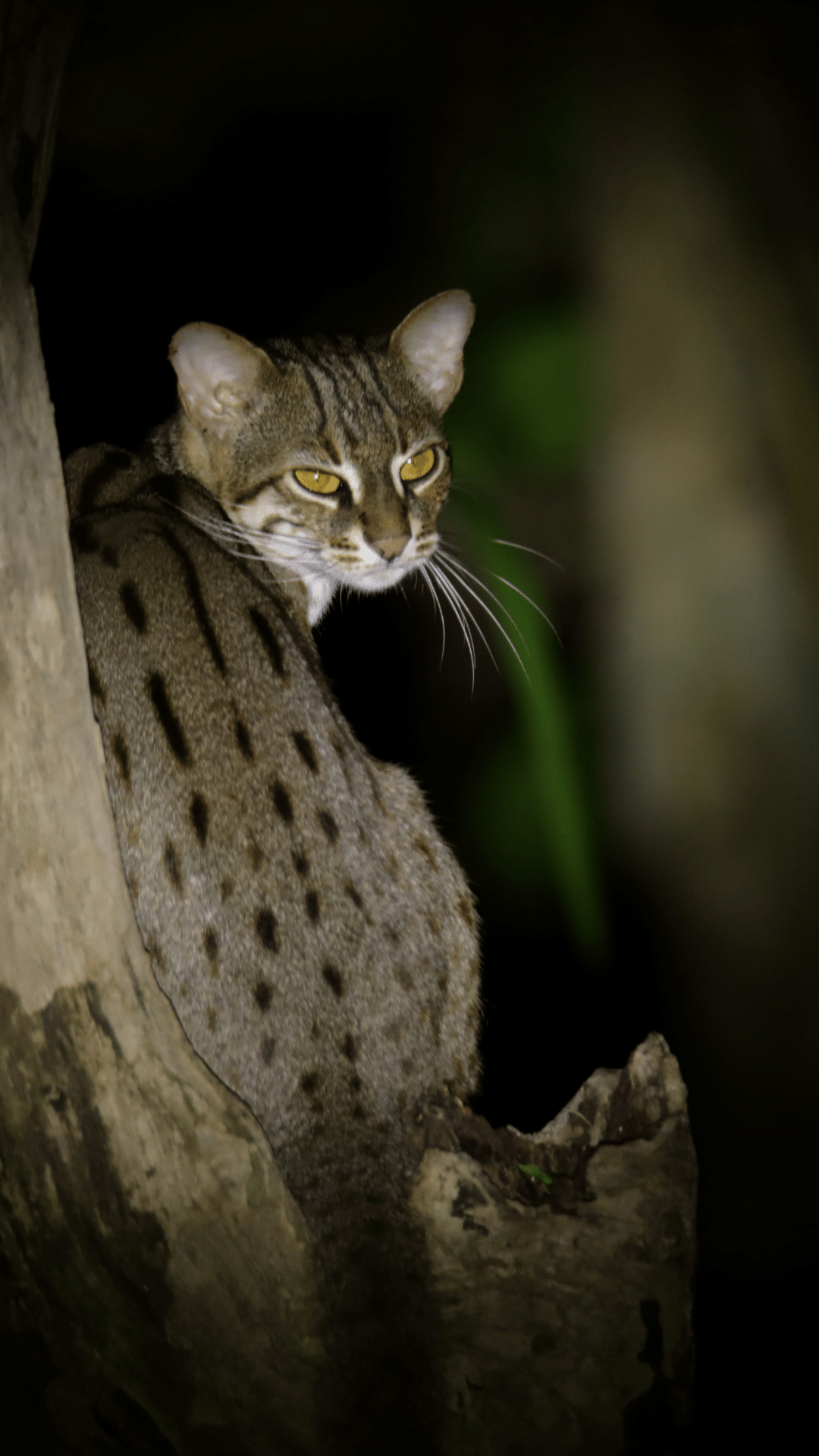
Prionailurus rubiginosusa
The rusty-spotted cat rivals Africa’s black-footed cat as the smallest wild cat species in the world. Little is known about its behaviour and distribution, owing to its miniature size, nocturnal and arboreal nature.
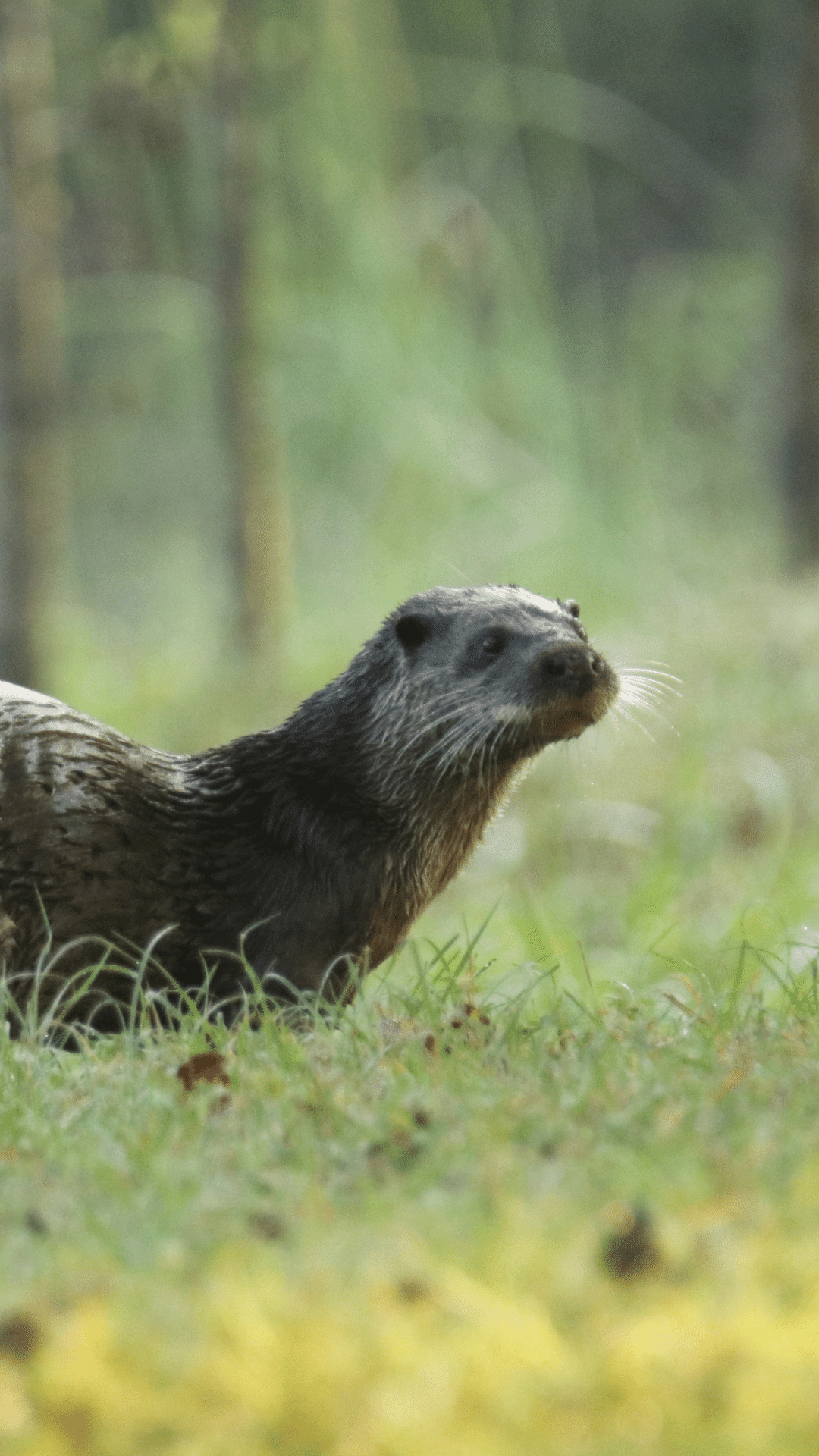
Lutra lutra
The presence of otters is used as a biological indication of the quality of the habitat. The fact that otters have colonized Jetwing Vil Uyana stands as testament to the health of the ecosystem.
“Hotel Jetwing Vil Uyana in central Sri Lanka put development plans on hold when the animals were discovered there in 2010, and now runs a successful conservation area to protect them.”
– BBC World News
“Many visitors to the eco-hotel come especially to witness its blossoming biodiversity. Sri Lanka is thought to be one of the best places in the world for tourists to experience wildlife, and guests at Vil Uyana are invited on tours so hotel staff can share details about its conservation initiatives.”
– Euronews Travel
“Since then, the forest has expanded and the resort has become slender loris central: Chaminda has recorded 25 new babies. Indeed, the BBC spent 17 days here, filming slender lorises for their 2020 Primates blockbuster.”
– The Telegraph
To experience the Loris Trail at Jetwing Vil Uyana
Tel: +94 66 2286000-3
resv.viluyana@jetwinghotels.com